Tourism in Cairu: What Was Announced and What the Community Raised at the COMTUR Meeting
|
Getting yours Trinity Audio Player ready... |
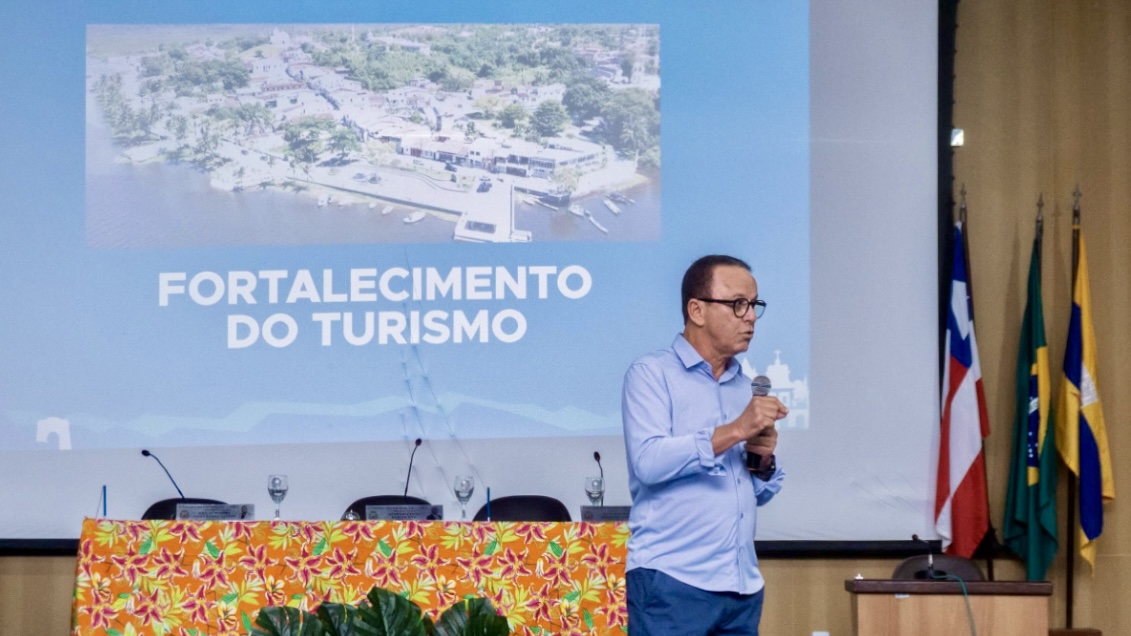
The Municipal Tourism Council (COMTUR) of Cairu held an open meeting on June 2, 2026, for business owners, tourism workers, residents, and public authorities, broadcast live on TV Câmara Cairu's YouTube channel, titled "Tourism in the Cairu Archipelago in Motion." According to the panel, it was the council's fourth meeting.
This summary records what was announced, with the deadlines mentioned in the speeches, and what the audience raised, with a link to the relevant excerpt from each speech. The deadlines are those stated at the meeting, and some have already passed. Where the website has updates, there is a link to them. Speakers included Mayor Hildécio Meireles , Secretary of Tourism Cláudio Brito , ACEC President Jackson Fernandes , consultant Alexandre Pereira , and publicist Elton , as well as residents and representatives from the tourism industry.
Why did COMTUR open the meeting to the public?
The mayor said that the number of competitors for the destination has increased and that the competitors have become better organized. According to him, the destination is experiencing setbacks that stem more from external than internal actions, in addition to probable failures by the public authorities and also by business owners and workers in the sector. The purpose of the open meeting was to create a forum for debate to seek solutions together ( ► 8:29 ).
Cláudio Brito reminded everyone that COMTUR has 18 members, nine from management and nine from the tourism trade, and that the meetings are open to all, including for suggestions ( ► 1:53:17 ). Jackson Fernandes, vice-president of COMTUR and president of ACEC, said that, in his view, the current situation is everyone's fault: the management, for neglecting other priorities, the business owners, for only looking out for themselves, and the community, for lacking a sense of belonging ( ► 1:57:09 ).
Visitation, TUPA and Municipal Revenue
The mayor said that a survey conducted the previous day indicated a drop of about 1% in tourist arrivals from January to May ( ► 21:10 ). A city hall employee presented another calculation: excluding those exempt from the TUPA tax, such as workers and residents of Valença, Taperoá, and other locations in the region who travel to and from the area on the same day, there would be a 14% increase compared to the previous year. The mayor stated that the administration would continue working as if the drop were real ( ► 22:02 ).
Regarding the TUPA fee , the mayor recalled that, at the meeting in Morro, the expectation was to reach R$ 70 to balance the waste transfer costs. According to him, R$ 90 would allow for new investments, such as expanding the Municipal Guard and training teams for initial firefighting ( ► 23:00 ). He said that the idea of R$ 90 was practically unanimous, but that he opted for R$ 70 and to anticipate improvements ( ► 24:29 ). To understand the fee, see everything you need to know about TUPA.
The mayor informed that 3% of TUPA's revenue goes to the Municipal Tourism Fund, with a forecast of around R$ 400 this year, applied to promoting the destination as decided by the council ( ► 32:51 ). Cláudio Brito said that the council manages the fund, that the resource will be invested in promotion, and that he thought, without being certain, that Cairu had never had a condition like the one it has now to promote the destination ( ► 1:58:09 ). Jackson Fernandes said that the hiring of marketing and consulting services by Alexandre Pereira already comes from this resource, as well as the brand, promotional magazines, and the hiring of influencers ( ► 1:59:26 ).
Later on, the mayor said that most of the tons of daily garbage is produced by tourists, who, according to him, should pay for it, and that the four health units with 24-hour service serve the population, but also tourists ( ► 3:02:42 ).
He also showed the drop in ICMS (Value Added Tax), which according to him was the municipality's main source of revenue: approximately R$ 42 million in 2021, R$ 31 million in 2022, R$ 35 million in 2023, R$ 29 million in 2024 and R$ 25 million in 2025, and R$ 6 million until May 30, 2026 ( ► 2:59:42 ). The municipality's revenue was also discussed at the public hearing on September 30, summarized here.
Destination Image on Social Networks and Prices
Elton recalled the "Empty Hill" videos released in early May. He said that the destination has seasonality and that, shortly before, the Tiradentes holiday had been longer than Labor Day, without any repercussions. According to him, when reading the comments on the videos, nobody mentioned TUPA. The comments complained about service and prices that he considered abusive, such as drinks at R$ 37,90, caipirinha at R$ 40, food at R$ 150 and a snack at R$ 92 ( ► 1:35:03 and ► 1:36:35 ).
Elton argued that problems should be dealt with by those who can solve them and not on social media, that the trade should combat unfair charges and abusive prices, and that customer service should be impeccable. According to him, other destinations charge per attraction, while Cairu has a single charge for the entire archipelago ( ► 1:37:31 and ► 1:39:47 ).
Works and Deadlines Announced for Morro and Boipeba
- New TUPA toll collection structure at the entrance to Morro, with men's and women's restrooms, improved roofing, and a comfortable area for the elderly and children. The mayor said he expects it to be delivered by June 30th.► 25:32 e ► 26:07).
- Requalification of the Farol viewpoint and the deck of the Primeira Praia viewpoint, in front of the Pousada Farol do Morro (► 28:03).
- Redevelopment of Aureliano Lima Square, with desired completion date of June 19th.► 28:23), and from the road from Morro to Zimbo and peripheral streets (► 28:53).
- Organization and standardization of street vendor units on Quarta Praia (► 29:26) and temporary reception area with parking and ATV riding training area (► 29:40).
- Extension of the Third Beach (► 30:06).
- Advanced health unit in Morro, costing R$ 9 million, half from the state government and half from the municipality (► 3:03:10).
In Boipeba, the mayor said he signed the contract for the new visitor center, with arrival and departure areas with chairs, a snack bar, restrooms, and air conditioning. Days later, a court injunction requested the suspension of the contract, and the city hall suspended it. He said he is confident he can overturn it. He will only resume charging the TUPA (a local environmental agency) in Boipeba once the visitor center is ready, which he expects to be in November or December ( ► 26:28 and ► 27:17 ). He also showed the planned roof for the Boipeba market square, in the same style as the Morro ( ► 31:00 ).
In response to a participant, the mayor said that the municipality is publishing the tender for a cargo loading and unloading terminal on Tinharé Island, with one lane for cargo and another for tourists and residents ( ► 3:03:32 ), and that it is seeking to build an airport on the island to serve Morro ( ► 3:03:54 ).
Festivals, Calendar and Destination Promotion
The mayor announced the Boipeba Spring Festival, in the same style as the Morro de São Paulo festival, and said that the attractions for the Morro de São Paulo festival, scheduled for early December, would be announced on June 19th, along with an early São João celebration ( ► 31:36 and ► 32:11 ). For what was announced later, see the Morro de São Paulo Spring Festival.
Jackson Fernandes said that the tourism and cultural calendar was already published on the official profiles and that the 2027 calendar should be released by November ( ► 2:01:40 and ► 2:02:09 ). He also said that the resumption of the gastronomic festival was under discussion ( ► 2:02:59 ). Cláudio Brito mentioned footvolley and volleyball events in Boipeba, Gamboa and Morro in the second half of the year ( ► 2:19:21 ) and made a request to the accommodation industry for production teams and bands of the festivals: if each guesthouse provides a room, the problem is solved ( ► 2:20:47 ).
Cláudio Brito presented the proposal for the archipelago to be the theme of the samba-enredo (theme song) of the Unidos Acadêmicos do Tatuapé samba school in São Paulo for the 2028 carnival. He said that the previous year's parade had an audience rating of 8,2 points, that there would be a live broadcast and 10 30-second spots on Rede Globo, and that the cost is approximately R$ 2,3 million, of which R$ 2 million could be raised through the Rouanet Law. According to him, the samba-enredo is launched starting in April of the previous year and open rehearsals begin in September ( ► 34:25 , ► 35:39 and ► 37:54 ).
Cláudio Brito presented a traveling workshop, to be tested in Brasília this year, with a business round, and taken to São Paulo, Minas Gerais, and Rio de Janeiro in 2027. It was said that the idea arose from the analysis of TUPA data, which shows where tourists come from ( ► 2:06:42 ). Jackson Fernandes announced the hiring, by ACEC, of a destination sales executive, who would participate in events and roadshows throughout the country, promoting the destination through private initiatives. Cláudio Brito joined the conversation at this point ( ► 2:12:08 ).
Jackson Fernandes said that actor Caio Castro wants to be the face of Cairu and that there are talks with the Chamber about a title for him. An event for local influencers is planned for the end of the year, and the trade was asked to provide accommodation, tours and meals to invited influencers ( ► 2:17:18 ).
Jackson Fernandes said that Cairu will be the first municipality in Bahia to have a tourism observatory, which will use data from TUPA and Cadastur. According to him, currently only the municipality's tourism agencies are 100% registered with Cadastur, and hotels, guesthouses, and restaurants were invited to register, free of charge ( ► 2:04:14 and ► 2:05:04 ). Jackson Fernandes also said that, in his view, this year the destination suffered more commercially than in the last eight years, and that the way forward is to review what was not done and create actions for the low season ( ► 2:21:50 ).
Consulting and Diagnostic Services for Tourism in Cairu
Alexandre Pereira, former Secretary of Tourism for Fortaleza, hired by the city government as a consultant, argued that the destination's unique selling point lies in its people and narrative. He believes that returning tourists are won over by the service and stories of the locals. He recounted that a boy who served him on Quarta Praia was the one who most impressed him during his visit ( ► 41:22 and ► 55:21 ). He stated that problems should be resolved locally and asked those present to be promoters of the destination ( ► 1:15:07 ).
He advocated for small-scale event and business tourism, for 300 to 500 people, during the low season. According to him, Cairu has lodging and transportation, but lacks an events center ( ► 57:47 ). He proposed a Visit Cairu, a convention bureau linked to ACEC, and a Tourism Observatory, at no cost to the city or businesses ( ► 1:28:11 ). The mayor said there is a possibility of acquiring land for a convention center ( ► 39:22 ).
In the inventory presented, the municipality has approximately 300 accommodations, 12 beds, and 326 bars and restaurants in operation ( ► 1:17:52 ). The diagnosis, made with questionnaires answered by the council, the trade, the secretariat, and the mayor's office, has three axes: domestic tourism and governance, promotion and positioning, and events and business ( ► 1:21:45 ).
The main tourist-generating states mentioned are Bahia, São Paulo, Minas Gerais, Rio de Janeiro, and Espírito Santo, and among foreign tourists, Argentina , Israel, Chile, and France ( ► 1:24:11 ). Among the infrastructure challenges, the diagnosis lists the logistics of embarkation and disembarkation, sanitation, restrooms, TUPA service via electronic means, and waste disposal ( ► 1:26:16 ).
New Brand for the Archipelago
Elton presented Cairu's new visual identity, created from workshops and questionnaires. According to the briefing he read, the current tourist is seen as a young, middle-class person, heavily influenced by digital media and with a low average spending per trip, and the objective is to attract an audience aged 30 to 55, couples and families with higher purchasing power and environmental awareness ( ► 1:40:48 ). The colors are blue, green, and shades of golden sand, avoiding neon, red, and excessive black ( ► 1:41:21 ). The brand uses the lighthouse, churches, cultural groups, and the walls of the hill as references, and the typography was designed letter by letter ( ► 1:42:51 and ► 1:45:14 ).
The slogan is “an archipelago, endless discoveries” ( ► 1:46:11 ). There will be two brands: Cairu and a commercial tagline, “Morro de São Paulo and Boipeba, Cairu”, designed for trade shows and promotional materials, because, according to Elton, those who don't know Cairu know Morro and Boipeba ( ► 1:46:52 ). There are also sub-brands by location and 37 documentary video scripts for the second half of the year ( ► 1:47:43 ). Among the ideas are a passport with stamps by location and experience, still under feasibility study ( ► 1:48:22 ), and a magazine of about 60 pages ( ► 1:49:56 ). ACEC also presented, in September, a joint brand and a sales portal aimed at the trade.
Revitalize the City of Cairu
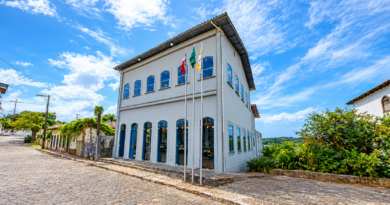
The mayor presented the "Revitalize the City of Cairu" program, focused on the historical center of the municipality's headquarters, which, according to him, has most of its houses closed on the street that goes up to the main church. The program is coordinated by the Secretary of Culture, Cíntia Palma , and has four pillars ( ► 11:04 and ► 16:21 ):
- Projects for already expropriated or public mansions have been submitted to the Ministry of Culture. One of them, the Casa de Reis São Benedito e da Música (House of Kings Saint Benedict and Music), was approved, with funding of approximately R$ 3 million. The other two, a contemporary art museum and a gastronomy school, have not yet been evaluated.► 12:08 e ► 12:55).
- Requalification of the mansions on Rua Direita, which have already been notified for expropriation. According to the mayor, they will be granted for 20 years, renewable for another 20, or purchased at today's price. The counterpart is a symbolic annual amount, which he estimated between R$ 60 and R$ 80, and the restoration of the original facade, preferably for commercial use (► 13:10, ► 14:09 e ► 14:41).
- Vacant lots with potential for development, in a second phase, with concessions under the same model (► 15:18).
- Creating products to attract visitors, such as the museum, culinary schools, cultural events, and holographic image projection (► 15:55).
The video shown at the meeting also mentioned a luxury hotel in the Santo Antônio convent and stated that, under the Cultural Incentive Law, the sponsor has 100% tax exemption ( ► 17:05 ). The mayor gave as an example someone who would pay R$ 5 million in income tax: they could invest R$ 3 million in the approved project and pay R$ 2 million to the Union ( ► 20:04 ). Alexandre Pereira said he can visualize Cairu ten years from now with this program ( ► 45:07 ).
What the Community Raised
In the final part, the audience had the floor. These were the points raised, with the answers given on the spot.
Occupation of the Second and Fourth Beaches
Mercedes , a resident of Morro for 40 years, requested an open and friendly discussion about the occupation of the two beaches. She said that the Second Beach “has become chaotic,” with varied activities, that the sand has been lost to commerce, and that concessions have been made to commerce. Regarding the Fourth Beach, she said that the occupation with 20 standardized stalls is not positive because, in her view, the sand should remain free, and she recalled that the beach was once considered one of the ten most beautiful on the planet. She also said that the Farol hill was forest and is now completely built up, and that tourists have stopped returning after the construction of the Third Beach walkway ( ► 2:32:06 , ► 2:34:03 and ► 2:35:27 ).
The mayor responded that the decision rests with the council, along with the workers and the community, and that if they decide to remove the workers from the beach, the city will remove them ( ► 2:36:04 ). He said that Morro has become a commercial center, that he doesn't consider Segunda Praia a chaotic area, that there has already been investment there and that now it's a matter of requalification, lighting and landscaping, but he acknowledged that there may be over-occupation ( ► 2:37:19 and ► 2:37:40 ).
Regarding Quarta Praia, the mayor stated that it can no longer be deserted as it once was, that the occupation is disorderly and involves not only workers but also business owners who built the area, and that standardization aims to improve the facilities for those who work there. He said that if the council decides to go back 40 years, there is no problem ( ► 2:38:57 ). Cláudio Brito concluded the matter by saying that it would be addressed later, in a COMTUR meeting, and that the meeting that day was focused on construction ( ► 2:39:19 ).
Beach Tour Sales
Sandra , vice-president of a guides' association, said that there are 84 registered guides, but that, according to her, many other people wearing shirts with various prints sell tours on the beach. She argued that only the 84 should sell tours and said that this also contributes to the disorder mentioned by Mercedes. She requested that the issue be discussed with the Tourism Secretariat ( ► 2:39:39 and ► 2:41:37 ). She also said that people seek the history of the places they visit, and that the tours often don't show the historical side of Cairu.
Prices, Reviews and Tourist Profile
Bia , a tour guide and seller, suggested that everyone working in tourism, even those without many followers, should respond to negative comments. She said that when they saw videos of the empty Morro, several clients asked if there was another pandemic, and that she responded in real time with audio and video showing the Morro in operation. Regarding comments that a dish costs R$ 120 or R$ 150, she said that she recommends restaurants with dishes starting at R$ 30 and that the Morro is not expensive for those seeking the right tips ( ► 2:24:50 , ► 2:26:03 and ► 2:26:47 ).
A resident of Quinta Praia said that, for those coming from the Southeast, the food is not expensive, and that paying R$ 140 for a dish is normal. He said that TUPA will not harm Cairu and that, in his view, the tourist who brings benefits is the one who spends on lodging, guides and restaurants ( ► 2:44:29 and ► 2:44:52 ).
He said he heard from taxi drivers in Feira de Santana, after the fee started being charged there, that there are visitors who stay for three days living in a van and don't eat at restaurants, buying instead at beverage depots or the market. According to him, in this case, Ambev gets rich, while the visitor leaves a mess and complains about the fee. He also cited the Feira de Santana convention center, which can hold 300 people, as an example of event tourism ( ► 2:45:05 and ► 2:46:14 ).
Cleaning, Mangroves and Inspection
The same resident said that he cleans microplastics from Quinta Praia in the afternoon and that, according to him, the material comes from the tides, not from tourists. He spoke about the state of the mangroves between Quarta and Quinta Praia and about the garbage on the Garapuá road, including construction debris, and said he felt ashamed of the situation. He asked for environmental education, faster cleaning and enforcement ( ► 2:47:10 , ► 2:47:41 , ► 2:48:24 and ► 2:50:03 ).
He suggested that motorcycle taxi drivers act as nature inspectors ( ► 2:50:55 ). He also recounted that the police were called because of a tent with music, which, according to him, was littering the beach at the end of Quinta Praia. Later, he and the landowner put up a sign citing a municipal law stating that it is prohibited there, and he argued that the law should apply to everyone ( ► 2:51:19 ).
Sustainability and Services in Boipeba
Gito , owner of a hostel in Boipeba, said that the presentation did not bring concrete measures for sustainable tourism, nor for the fauna and flora. He reported that Boipeba runs out of water every night and that there are power outages when the island "fills up a little," and said he suffered losses last summer, with a drop in business that, according to him, is not reflected in the numbers presented. He stated that there are private ecotourism initiatives and guides in Boipeba who were never brought to the table, and that he feels he is being asked to share the blame for services that, in his opinion, do not work ( ► 2:53:23 ).
The mayor responded that he considered it disrespectful, after the work mobilized by business owners, the trade sector, and the public authorities, to receive a speech that, according to him, sought to undo what is being built ( ► 2:57:39 ). He said that sustainable tourism is achieved through investment and planning, that waste is still treated in a rudimentary way, and that the municipality is working towards sustainability ( ► 2:58:23 ). He then presented the reduction in ICMS (a state sales tax) and the aforementioned projects, and invited Gito to join the trade sector and the council, saying that the suggestions would be evaluated, without any guarantee that they would be implemented ( ► 3:02:15 ).
Folklore, Safety, Waste and Associations
Alemão , a tour guide, said that tourism sustains the municipality and advocated for creating articles and itineraries featuring the folkloric groups of each community ( ► 2:27:59 ). Franklin Nelby , president of a tour association, said that the media doesn't talk about the municipality's security or healthcare services. He recounted the case of a tourist from Rio de Janeiro who was injured, received 24-hour medical attention in Boipeba, was referred to Valença, and accompanied to her guesthouse in Morro ( ► 3:04:31 , ► 3:05:48 and ► 3:06:21 ).
Dido , from Boipeba, argued that businesses should associate themselves, citing data from the Ministry of Tourism showing that 47% of tourists choose their destination through social media ( ► 3:08:49 and ► 3:11:33 ). Regarding garbage, he said that the city hall chose not to charge residents for garbage collection and instead pass the cost on to TUPA, because removing garbage from the island is more expensive than in Valença ( ► 3:12:24 ). He recounted that, on a day when glass was collected at a specific point, no business owner brought separated glass, and asked that the trade assume this responsibility ( ► 3:13:30 ).
Other Meeting Records
- House rentals: Cláudio Brito said that the City Council should soon present a bill to regulate house rentals, which, according to him, harm the hotel sector.► 1:54:21).
- Sports and cultural calendar: Cláudio Brito mentioned the meeting of forró dancers at the headquarters, the São Pedro festivals in Gamboa and Boipeba, and the music festivals in Boipeba and Morro (► 2:19:21).
- Final phrase: Jackson Fernandes concluded by saying that the destiny we want tomorrow depends on the decisions and unity built today.► 2:23:56).
This text summarizes what was said at the open meeting of the Cairu Municipal Tourism Council, based on the broadcast by TV Câmara Cairu on YouTube. The statements are from the participants and have not been verified by the editorial staff. The automatic transcription may contain errors in names, numbers, and values, and the summary may not include all details. To check each point, use the link to the time next to it or watch the complete video. In case of discrepancy, the official record of the municipality prevails.
Sources: TV Câmara Cairu, Tourism in the Cairu archipelago in motion , open meeting of the Municipal Tourism Council, broadcast live on June 2, 2026.